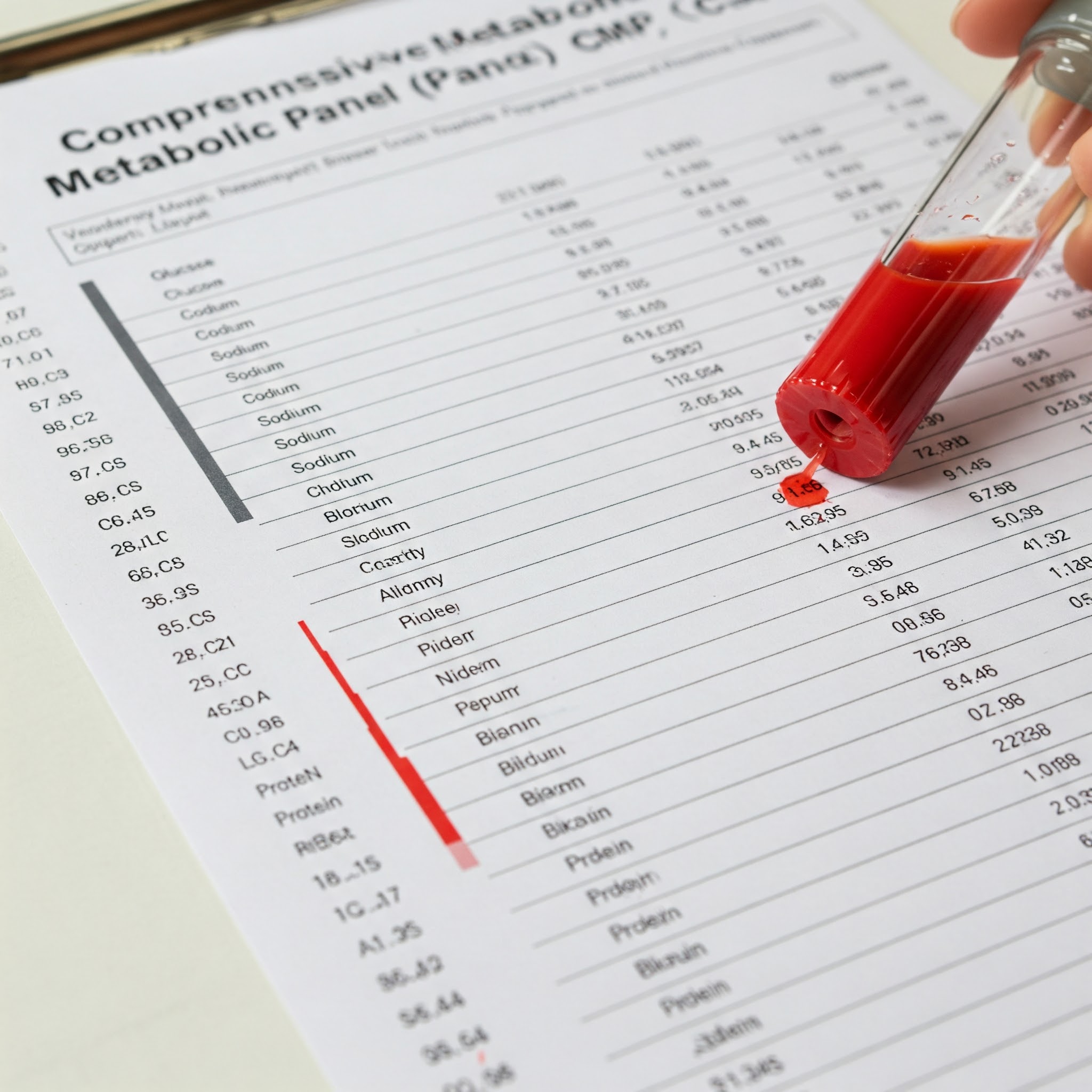

COMPREHENSIVE METABOLIC PANEL (CMP)
What does a CMP measure?
The CMP is divided into two main parts:
Basic Metabolic Panel (BMP): This includes:
Glucose: Your blood sugar level.
Calcium: Important for bones, muscles, and nerves.
Electrolytes:
Sodium: Helps regulate fluid balance.
Potassium: Important for nerve and muscle function.
Chloride: Helps maintain fluid balance.
Bicarbonate: Helps maintain acid-base balance.
Kidney function tests:
Blood Urea Nitrogen (BUN): A waste product your kidneys remove.
Creatinine: Another waste product removed by kidneys.
Liver Function Tests (LFTs): This includes:
Albumin: A protein made by the liver.
Total protein: Measures all proteins in your blood.
Alkaline phosphatase (ALP): An enzyme found in the liver and bones.
Alanine aminotransferase (ALT): An enzyme found in the liver.
Aspartate aminotransferase (AST): An enzyme found in the liver and other tissues.
Bilirubin: A waste product from the breakdown of red blood cells.
Why is a CMP performed?
Doctors use the CMP for a variety of reasons:
General health check-up: As part of a routine physical exam.
Diagnosing medical conditions: To help identify problems with your kidneys, liver, or metabolism.
Monitoring existing conditions: To track the progress of diseases like diabetes or liver disease.
Monitoring medication side effects: Some medications can affect your liver or kidneys.
What do the results mean?
Abnormal results on a CMP can indicate various health issues. For example:
High glucose: May indicate diabetes or prediabetes.
Abnormal electrolyte levels: Can be caused by dehydration, kidney disease, or other conditions.
Abnormal kidney function tests: May indicate kidney disease or damage.
Abnormal liver function tests: May indicate liver disease, hepatitis, or other liver problems.
Your doctor will interpret your CMP results in combination with your medical history and other tests to make a diagnosis.
As low as
700.00 299.00