
LIVER FUNCTION TESTS (LFTS)
What do LFTs measure?
LFTs typically include the following tests:
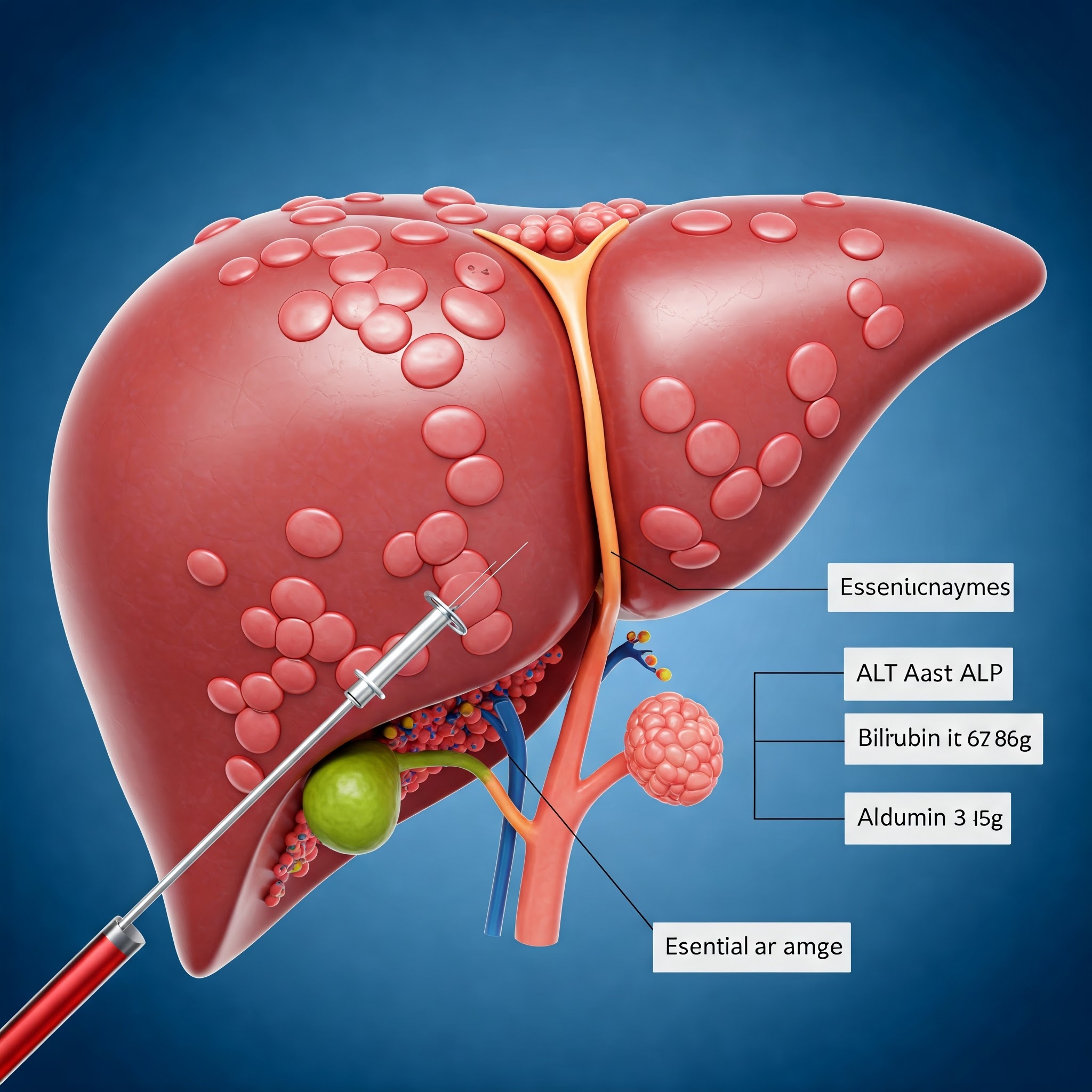
Alanine aminotransferase (ALT): An enzyme found primarily in the liver. High levels can indicate liver damage.
Aspartate aminotransferase (AST): Another enzyme found in the liver and other tissues. High levels can also indicate liver damage, but can also be elevated due to muscle damage.
Alkaline phosphatase (ALP): An enzyme found in the liver, bones, and other tissues. High levels can indicate liver or bone problems.
Bilirubin (total and direct): A waste product from the breakdown of red blood cells. High levels can cause jaundice (yellowing of the skin and eyes) and indicate liver problems.
Albumin: A protein made by the liver. Low levels can indicate liver disease or malnutrition.
Total protein: Measures the total amount of protein in your blood.
Why are LFTs performed?
Doctors use LFTs to:
Screen for liver disease: In people with risk factors or symptoms.
Diagnose liver conditions: Such as hepatitis, cirrhosis, or fatty liver disease.
Monitor the progression of liver disease.
Monitor the effects of medications that can affect the liver.
As low as
700.00 300.00