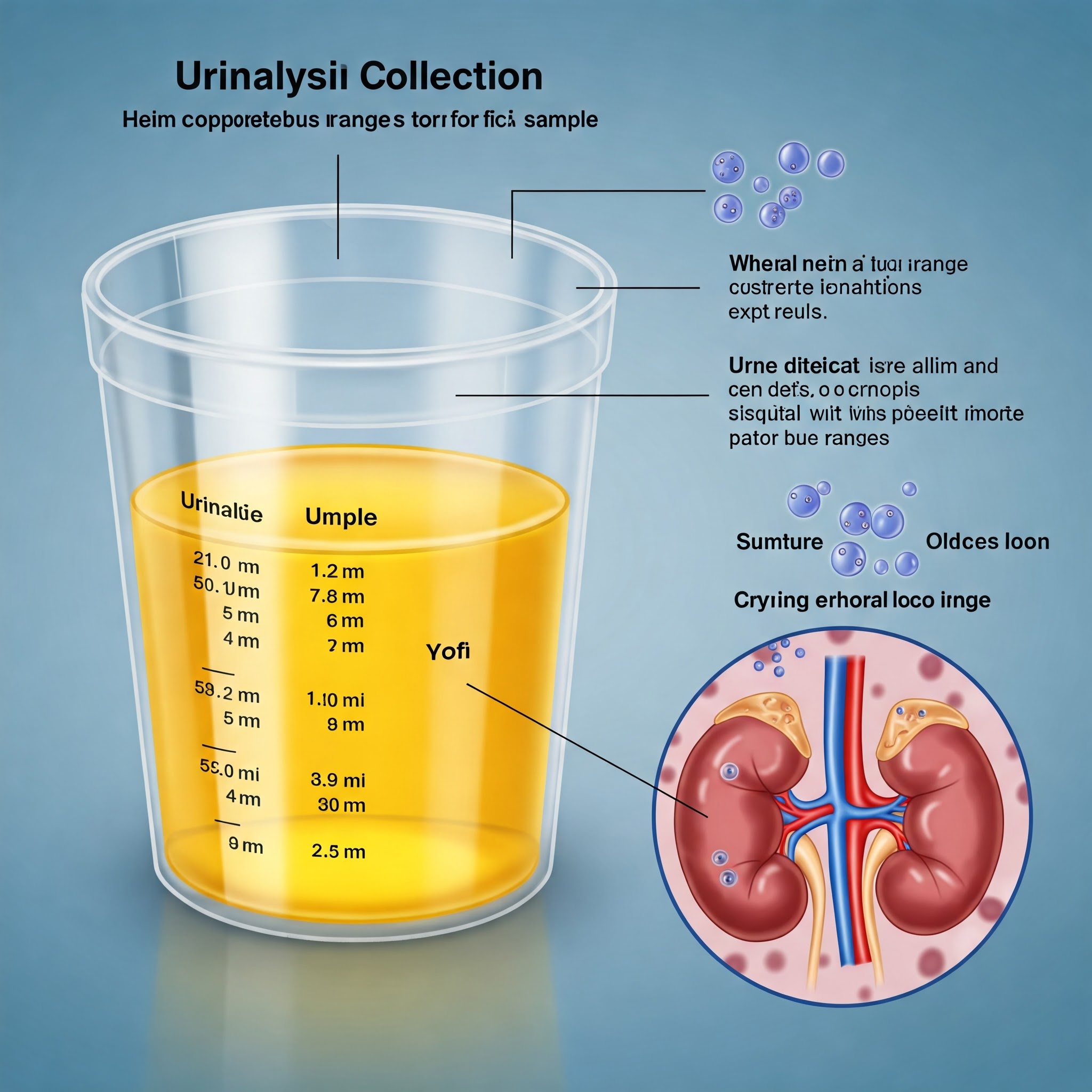

URINALYSIS
What does a Urinalysis measure?
Urinalysis typically involves three parts:
Visual examination: Looking at the urine's color, clarity (clear or cloudy), and odor.
Chemical examination (urine dipstick): Using a dipstick with chemical pads that react to different substances in the urine, checking for:
pH: Acidity or alkalinity of the urine.
Specific gravity: Concentration of particles in the urine.
Protein: Can indicate kidney problems.
Glucose: Can indicate diabetes.
Ketones: Can indicate diabetes or starvation.
Bilirubin: Can indicate liver problems.
Blood (red blood cells or hemoglobin): Can indicate kidney stones, infection, or other problems.
Leukocyte esterase: An enzyme produced by white blood cells, which can indicate infection.
Nitrites: Can indicate a bacterial infection.
Microscopic examination: Examining the urine under a microscope to look for:
Red blood cells
White blood cells
Bacteria
Crystals
Casts (cylindrical structures formed in the kidney tubules)
Why is a Urinalysis performed?
Doctors use urinalysis to:
Detect urinary tract infections (UTIs).
Evaluate kidney function.
Screen for diabetes.
Detect liver disease.
Screen for other metabolic disorders.
As low as
298.00 150.00